Science
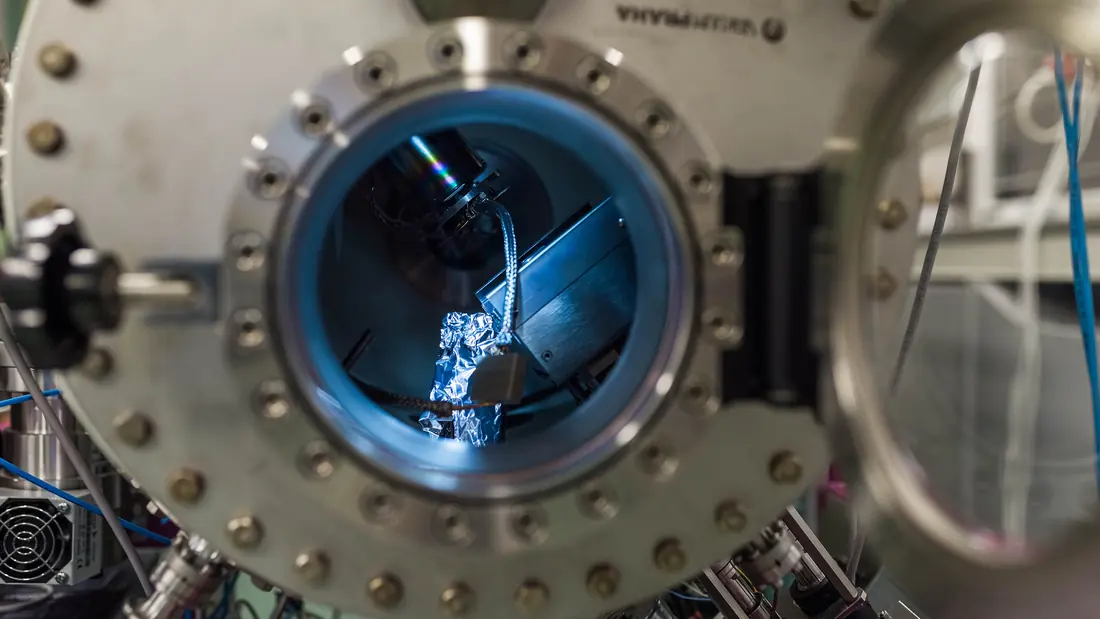
Counteranion captures reactants to boost light-driven chemistry in dilute solutions
Researchers at Kyushu University have developed a photocatalytic system that can selectively capture reacting molecules and hold them close to the active sites that absorb energy from light. This innovation addresses a…
- Published
- (1 h ago)
- Outlet
- Phys.org
- Section
- Science
- Length here
- Headline and 32-word snippet. The full article is at the source.
More from Phys.org and around the same time
 Biodiversity hotspots in southwestern Germany are losing their species richnessClimate change and shifts in land use are affecting habitats and, consequently, plant diversity. To better understand the consequences of these developments, long-term and comprehensive data are essential. The "Floristic Mapping…The way Earth's 'thermostat' works may have changed during Pangea eraLife arose on Earth at least 3.5 billion years ago, and our planet has remained habitable ever since—not too hot, not too cold. These life-sustaining conditions are possible in part thanks to a built-in, carbon cycle–based…Identical vesicles, different behaviors: Model reveals how spontaneous asymmetry gives rise to lifelike behaviorIn nonreciprocal active matter, agents act differently on each other, seemingly in violation of Newton's third law. This principle can result in various active matter traits, such as self-propulsion, molecular regulation and…Can your brain make you see ghosts? The science behind the Bloody Mary legendIt's Halloween night. Someone has dared you to turn off the lights and stand in front of the mirror. The rules are simple: Stare into your reflection and say her name three times.A 'simple recipe' takes some of the guesswork out of mass spectrometry imagingA small sample of human tissue can hold a remarkable amount of information. Researchers can use it to search for molecular clues associated with cancer, investigate the chemical landscape of the brain or determine where a drug…Rubin Observatory reveals its first dwarf planet candidate in our solar systemScientists may add a new dwarf planet to the official roster of our solar system. The distant, icy body, provisionally dubbed 2026 ED138, orbits our system beyond Pluto. It was spotted earlier this month by a scientist combing…
This page holds the headline and a short snippet as published by Phys.org, whose feed they came from. The story itself, the photography and the rights stay with them, and the button above goes straight to their site. We keep this page so the headline has a stable address and a record of when it ran.