Science
Does the future of food production start in the lab?
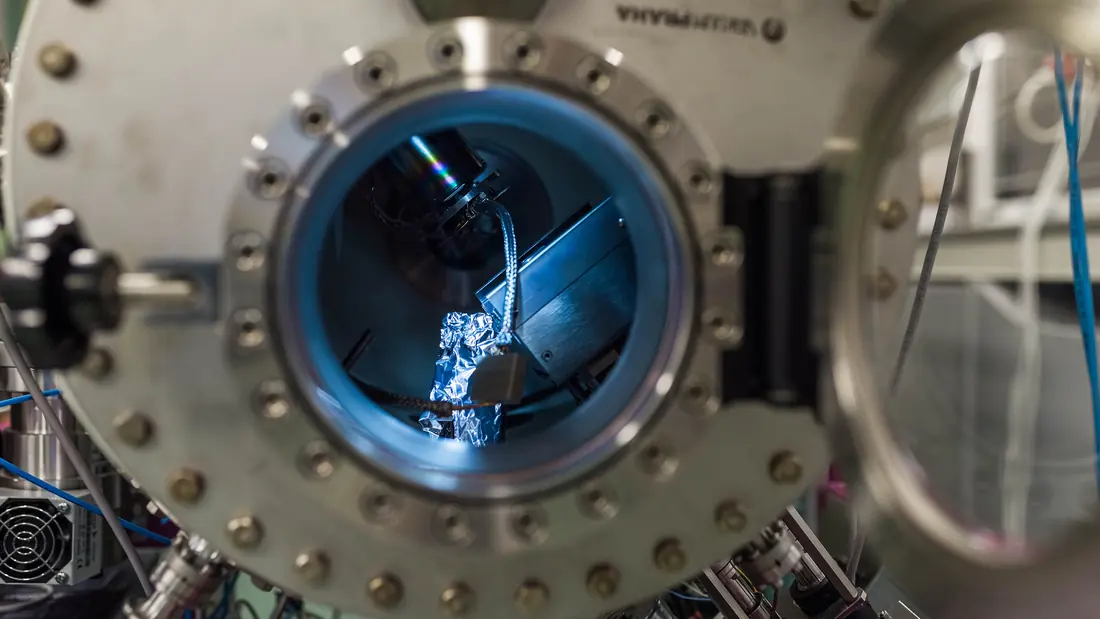
Lab-grown protein that mimics the color, taste and texture of meat. Egg white substitutes used for baked goods. Food colorants that replace beta-carotene extracted from carrots. Those are some of the products created with…
- Published
- (1 h ago)
- Outlet
- Phys.org
- Section
- Science
- Length here
- Headline and 34-word snippet. The full article is at the source.
More from Phys.org and around the same time
 Scientists discover hidden weaknesses in microtubules stabilized by a cancer drugResearchers at the Nano Life Science Institute (WPI-NanoLSI) at Kanazawa University have discovered that tiny structural defects can trigger the breakdown of microtubules, the microscopic structures that help cells maintain their…Embrace lazy fall gardening to protect wildlifeAs winter approaches, many of us start clearing leaves and tidying up our gardens. But these jobs can remove vital winter habitats for wildlife, particularly with increasingly volatile weather conditions.Paleontologists reveal the hidden role of eye pigments in vertebrate evolutionPaleontologists at University College Cork have discovered that the evolution of fish is linked to the shape, location and abundance of tiny melanin-rich granules called melanosomes. These features survive in 300-million-year-old…Quantum gates set speed record at 6.8 nanoseconds with over 99.98% accuracyResearchers from Jülich, Aachen and Cologne have performed a quantum operation on a qubit in just 6.8 nanoseconds—with more than 99.98% accuracy. Such operations typically take several tens of nanoseconds in superconducting…How Russian regions are affected by the war on UkraineThe war on Ukraine is changing Russia far beyond the immediate effects of the conflict.Embedded enzymes help plastics break down faster in the deep seaScientists have developed a way for certain types of compostable plastic to break down much faster in marine environments, from shallow coastal waters to the deep sea. The breakthrough comes from tiny enzymes embedded in the…
This page holds the headline and a short snippet as published by Phys.org, whose feed they came from. The story itself, the photography and the rights stay with them, and the button above goes straight to their site. We keep this page so the headline has a stable address and a record of when it ran.