Science
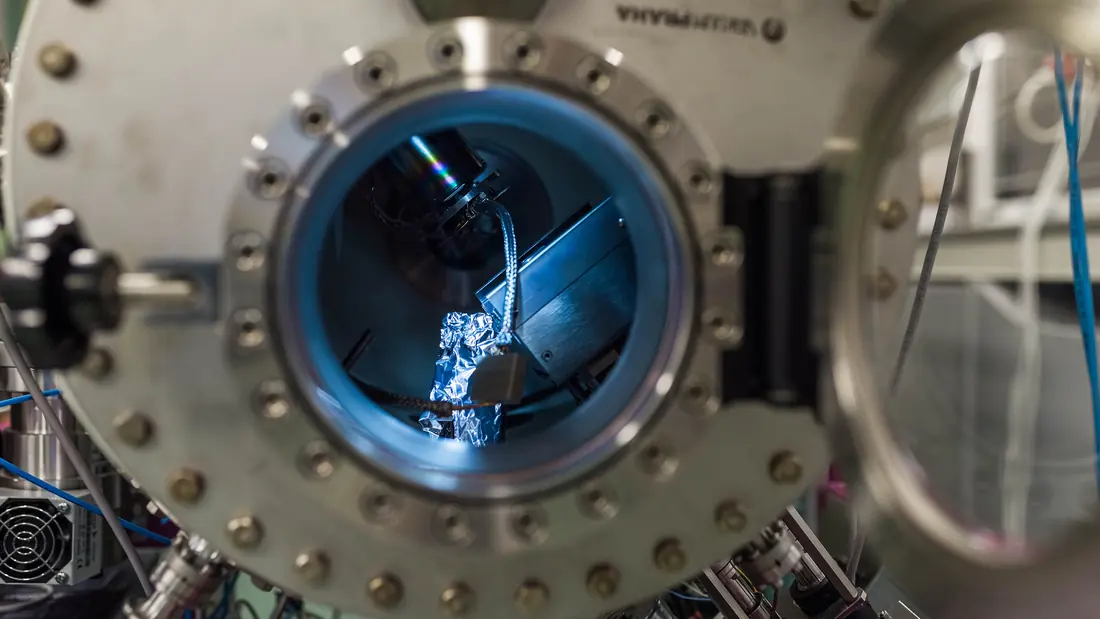
Eaton Fire may have exposed nearly 7 million people to elevated lead levels
Caltech scientists have published the first detailed analysis of the atmospheric particles in the smoke plume from the Eaton Fire that devastated much of the town of Altadena in Southern California's San Gabriel Valley and the…
- Published
- (1 h ago)
- Outlet
- Phys.org
- Section
- Science
- Length here
- Headline and 36-word snippet. The full article is at the source.
More from Phys.org and around the same time
 Scientists count more than 2 million eels on one underwater mountainPatience Seamount is an underwater mountain in Australia's Huon Marine Park off the coast of Tasmania. Every year, it is the site of an enormous gathering of basketwork eels (Diastobranchus capensis) for reasons unknown, although…Study finds celebrity digital twins may boost trust in customer serviceImagine losing your credit card, logging into your bank's website for help and being greeted by a virtual customer service representative who looks and sounds exactly like actor Hugh Jackman. The person helping you isn't actually…Gambling risks found among teens as young as 13More than half (52.5%) of Americans ages 13 to 27 reported gambling in the past year, including 42.7% of teens ages 13 to 17, according to researchers at the Center for Gambling Studies at the Rutgers School of Social Work.How childhood experiences shape employment outcomes in IndiaResearch led by the University of East Anglia (UEA) shows that childhood poverty, poor living conditions and gender can have lasting impacts on employment opportunities and earnings in India.UV scans uncover natural varnish that may have preserved ancient Chauvet Cave drawingsTucked away inside a limestone cave in southeastern France lies some of the oldest artwork in existence. Known as Chauvet Cave, the site is so historically important—and fragile—that its location is kept secret and the cave is…Supersonic waves could explain the strange orbits of hot Jupiters and NeptunesUsing advanced new simulations, a team of astronomers in the U.S. has developed a promising new theory for how giant, gaseous exoplanets migrate into stiflingly close orbits around their host stars. Led by J. J. Zanazzi at The…
This page holds the headline and a short snippet as published by Phys.org, whose feed they came from. The story itself, the photography and the rights stay with them, and the button above goes straight to their site. We keep this page so the headline has a stable address and a record of when it ran.