Science
Giant virus yields potassium channel gene that illuminates complex protein evolution
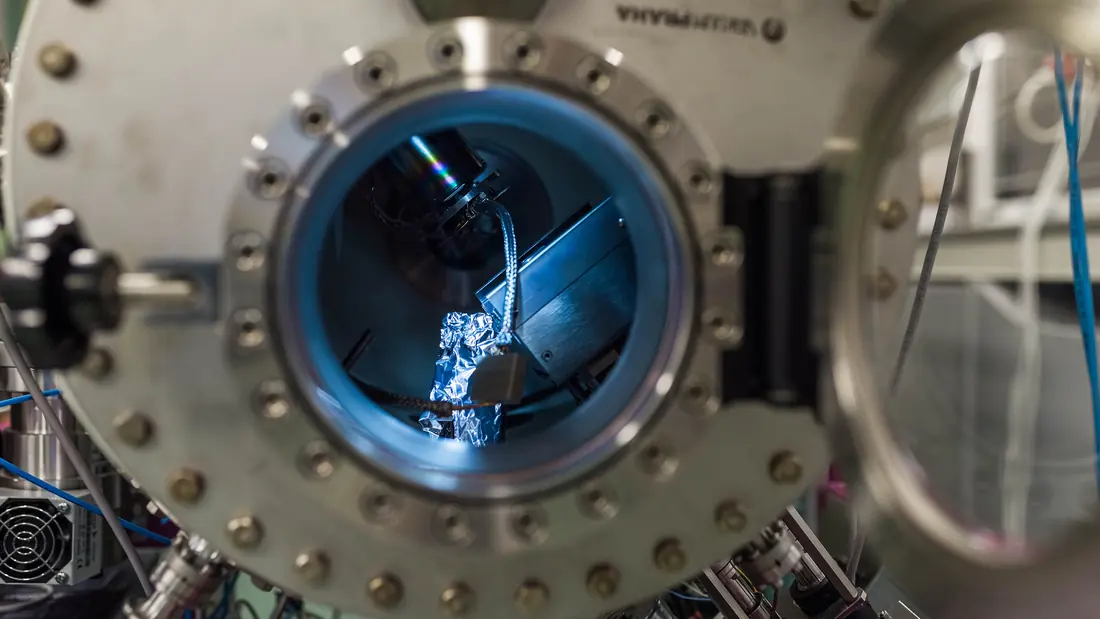
Researchers have discovered a gene for a tandem potassium channel in an algal virus. The finding supports the view that giant viruses may have contributed significantly to the evolution of complex proteins. The study is published…
- Published
- (51 min ago)
- Outlet
- Phys.org
- Section
- Science
- Length here
- Headline and 36-word snippet. The full article is at the source.
More from Phys.org and around the same time
 Why do people prefer human empathy despite rating AI empathy higher?More people are turning to artificial intelligence (AI)-powered chatbots for companionship and to address loneliness. But can AI-generated empathy replace human connection?Chemists develop AI tool to convert human ingenuity into life-enhancing enzymesMany have voiced concerns that artificial intelligence will take jobs away from humans. But assistant professor of chemistry Zhongyue (John) Yang, along with his former doctoral student Qianzhen Shao (now a postdoc at Stanford)…Calling species 'invasive'—and culling them—isn't done lightly. But it matters to Australia's threatened speciesIt may sound abstract, but distinctions between "native," "introduced" or "invasive" species can often be life or death. Species considered invasive in Australia—such as European rabbits and feral pigs—are often culled, while…Ultracold atoms simulate hard-to-observe matter-antimatter pair productionAccording to quantum electrodynamics, the theory describing interactions between light and electrically charged particles, a sufficiently strong electric field can, in principle, convert some of its energy into particles and…Four superconducting cables link two large quantum processors into oneAs quantum computers grow more ambitious, many researchers believe the best way forward is to build them in multiple interconnected parts. In these modular designs, separate quantum processors are linked so they can work together…Rare Iron Age Celtic helmet discovered in northeastern Poland far from its homelandAround 2,400 years ago, at Łysa Góra in Poland, a group of people took a bronze helmet, crushed it, broke it into pieces and threw it into a pit with iron adzes and a scythe. Such helmets are sometimes found in lavish graves of…
This page holds the headline and a short snippet as published by Phys.org, whose feed they came from. The story itself, the photography and the rights stay with them, and the button above goes straight to their site. We keep this page so the headline has a stable address and a record of when it ran.