Science
Rare 4.1-billion-year-old Martian meteorite reveals clues to planet's ancient past
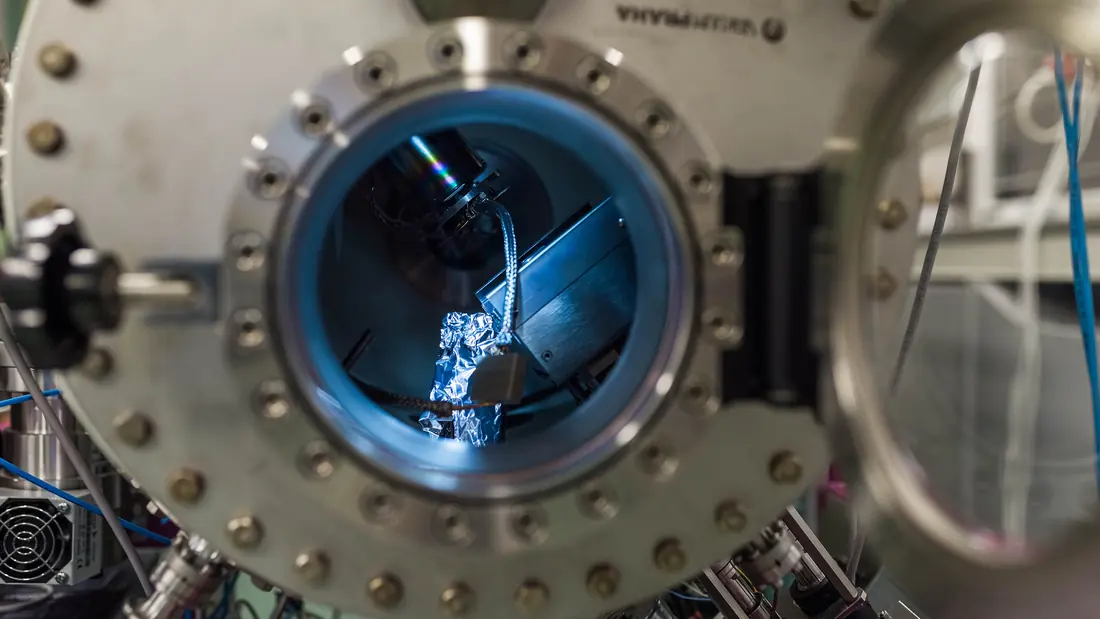
Scientists at the University of New Mexico have played a key role in identifying a rare, 4.1-billion-year-old Martian meteorite that provides new evidence that the red planet may have once had a wetter, Earth-like environment.
- Published
- (1 h ago)
- Outlet
- Phys.org
- Section
- Science
- Length here
- Headline and 35-word snippet. The full article is at the source.
More from Phys.org and around the same time
 NASA's new UV space telescope will launch in 2031Most of us could spend our entire lives looking at the night sky and see very few changes. The moon becomes more or less illuminated, the planets drift placidly through the sky, satellites and the ISS intrude for a few moments at…Study: Partisan ties shape how voters view campaign AIAs political campaigns increasingly use artificial intelligence to communicate with voters, questions arise about how the technology influences perceptions of election fairness and trust.Keeping one eye open: Veterinarian applies unique treatment to preserve dog's eyesightAparna Shah teaches Virginia Tech students how the human eye turns light into sight. In May, she saw her dog lose his.Evolutionary changes in key enzyme may help bacteria make proteins fasterEvolutionary changes in a key protein synthesis enzyme, isoleucyl-tRNA synthetase (IleRS), may help bacteria fine-tune how quickly proteins are made, report researchers from Institute of Science Tokyo, Japan; the University of…Using machine learning to build safer citiesIn eThekwini, researchers have harnessed machine learning and satellite data to spot the city's most landslide-prone zones. A new study published in Scientific Reports has found that urban development activities, including road…How ancient insect-eating diets could inspire more sustainable food systemsNew research from Durham University highlights how insects have been part of human diets for thousands of years despite seeming unusual to many people.
This page holds the headline and a short snippet as published by Phys.org, whose feed they came from. The story itself, the photography and the rights stay with them, and the button above goes straight to their site. We keep this page so the headline has a stable address and a record of when it ran.