Science
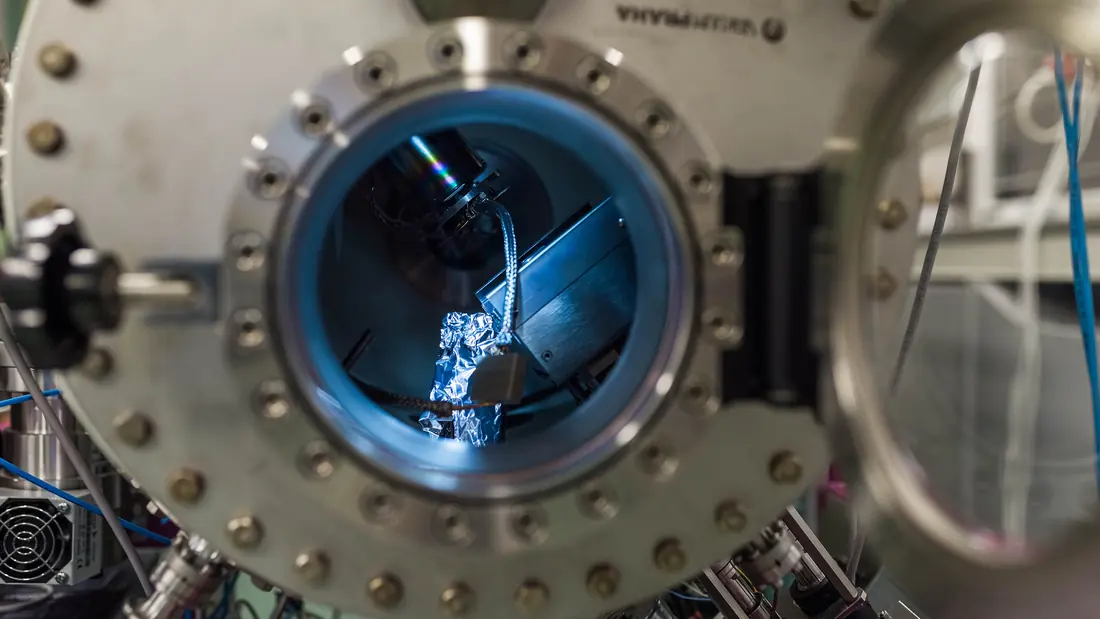
Scientists develop new system to boost prime editing in dicot plants
A new gene-editing system could make it easier for researchers to introduce precise genetic changes into crops such as tomatoes, soybeans and rapeseed. Developed by researchers in China, SmartPE improves prime editing efficiency…
- Published
- (1 h ago)
- Outlet
- Phys.org
- Section
- Science
- Length here
- Headline and 33-word snippet. The full article is at the source.
More from Phys.org and around the same time
 Spatial mapping reveals how human urogenital organs codevelop during organogenesisA new study has mapped human urogenital development in its native spatial context, revealing how neighboring organs coordinate their development through cellular communication and molecular signaling during embryogenesis.Figuring out where cosmic neutrinos come from is tricky—radio telescopes could help find 'ghost particles' originNeutrinos are funny little particles that weigh almost nothing, making them one of the universe's most elusive building blocks. They can come from objects as mundane as bananas and as exotic as supernovas—the exploding death…Livestock guardian dogs enlisted in efforts to conserve Texas' smallest foxIn the Texas Panhandle, two livestock guardian dogs patrol a herd of cattle grazing the Rita Blanca National Grasslands. Although their singular focus is protecting the herd from would-be predators, their presence may make them…New home for orangutans rescued from Indonesia's burning forestsDeep in a forest in Indonesian Borneo, conservationists open a cage. A female orangutan and her baby waste little time, clambering up the towering trees and disappearing into the canopy, safe at last.For many, striped bass fishing is a way of life. But the iconic species could face collapseStriped bass fishing has been Bill Jakob's passion for more than 60 years, and he remembers an era when he'd spend all night casting his line into the crashing waves off Montauk and get eight or nine fish ranging up to 40 pounds…Chemists create disappearing tattoos: Here's the science behind how they workHow handy would it be if you could make your tattoos invisible for a job interview in the morning, and reveal them again for a party in the evening? This sounds like science fiction, but it may soon be reality.
This page holds the headline and a short snippet as published by Phys.org, whose feed they came from. The story itself, the photography and the rights stay with them, and the button above goes straight to their site. We keep this page so the headline has a stable address and a record of when it ran.