Science
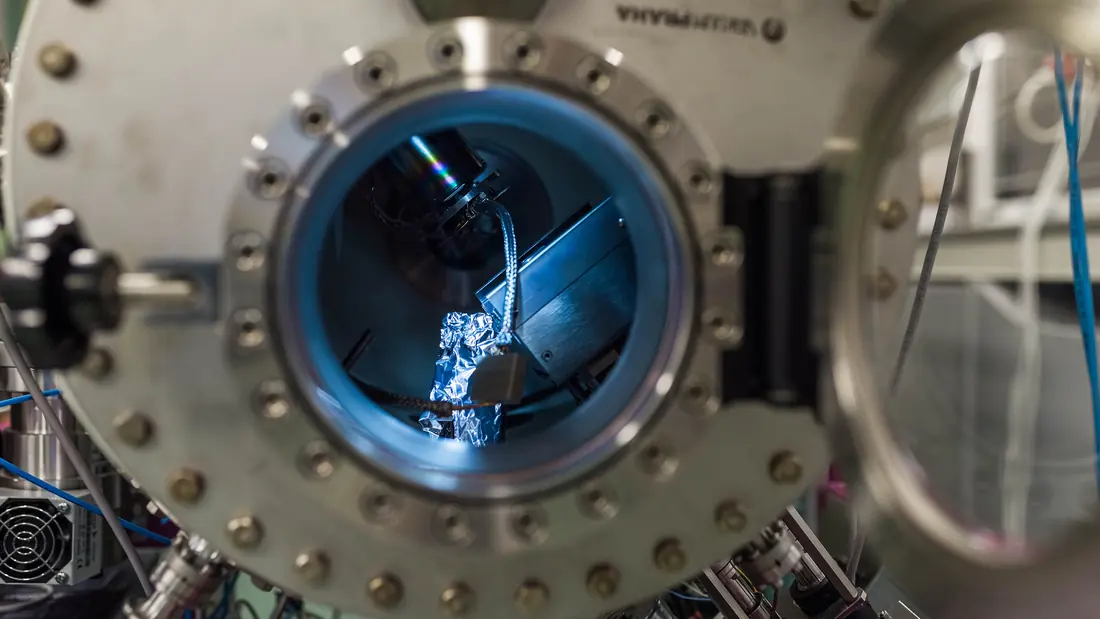
SPINE: A machine-learning program is on the trail of ghost particles
Neutrinos are among the most abundant particles in the universe, but they are also among the most elusive. Nearly massless, they are produced by nuclear reactions in the sun, exploding stars, particle accelerators and even the…
- Published
- (59 min ago)
- Outlet
- Phys.org
- Section
- Science
- Length here
- Headline and 36-word snippet. The full article is at the source.
More from Phys.org and around the same time
 What makes us human? Researchers compare brain development in humans and great apesHow did the human brain become so much larger than that of our closest evolutionary relatives? Part of the answer lies not in new genes, but in how humans and non-human apes use the genes they share. Using brain organoids grown…Autonomous rendezvous system overcomes simulated spacecraft failures in lab testsThere is a problem in low Earth orbit, and it's growing. According to the European Space Agency, there are about 19,440 satellites on orbit, 3,540 of which are nonfunctioning and/or not emitting a signal to warn other spacecraft…Cooperation in fish: Study reveals a social complexity seen mainly in birds, mammalsIn some group-living animals, individuals other than the parents help care for offspring. This breeding system, known as cooperative breeding, is thought to have evolved from monogamous family groups in which offspring remain in…Same species, different climate risks: Why plant conservation needs regional strategiesA study analyzing the effects of climate change on vascular plants in the United States finds that the fate of individual plant species tends to be a regional phenomenon.Reusable palladium catalyst enables more direct chemical synthesisMaking complex molecules often means joining smaller chemical building blocks together, a process facilitated by catalysts, compounds that make such reactions possible or speed them up without being consumed themselves. Many…How native stingless bees are helping to combat antimicrobial resistanceNew research from the University of Sydney expands the potential medicinal benefits of honey and propolis (the plant resin and beeswax mixture bees use to build their nests) produced by Australia's stingless bees. Building on…
This page holds the headline and a short snippet as published by Phys.org, whose feed they came from. The story itself, the photography and the rights stay with them, and the button above goes straight to their site. We keep this page so the headline has a stable address and a record of when it ran.