Science
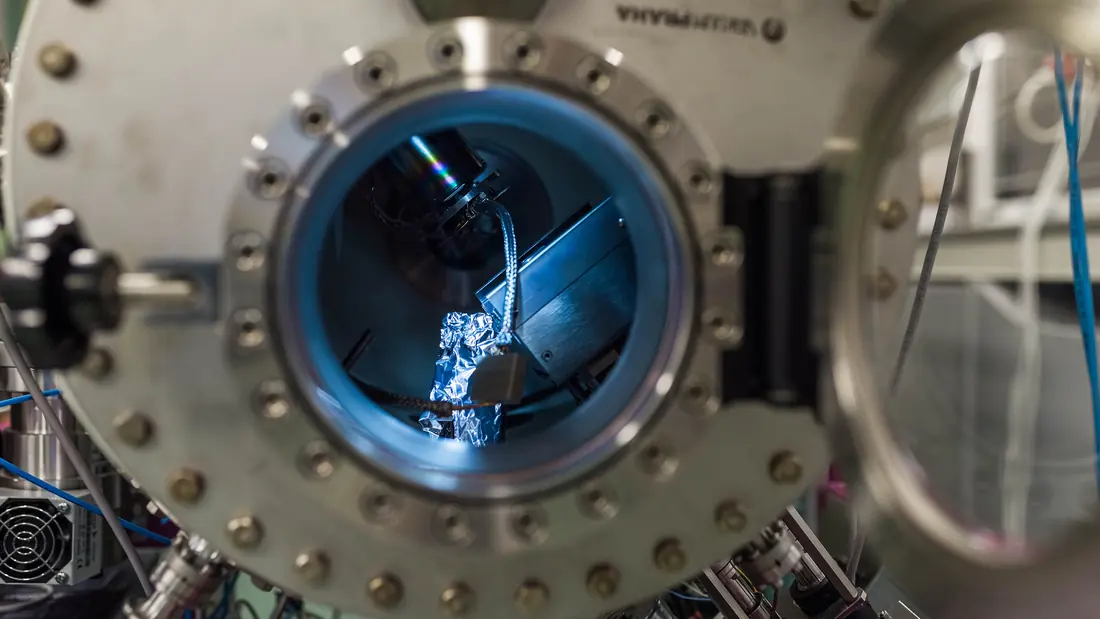
Using hydrogen to spark ammonia engines into life
"Ammonia was first used as a fuel during World War II, when gasoline was hard to get hold of," explains David Emberson, associate professor at NTNU's Department of Marine Technology.
- Published
- (1 h ago)
- Outlet
- Phys.org
- Section
- Science
- Length here
- Headline and 30-word snippet. The full article is at the source.
More from Phys.org and around the same time
 New fossil scans challenge insect flight timeline, suggesting origins up to 80 million years laterA tiny fossil discovered exactly a century ago has caused an enormous change in our understanding of when flying insects first appeared on Earth.New mathematical method improves calculations for systems limited by their smallest inputA harmonic increment provides a new way to improve smooth approximations of the minimum function. In a recent paper, published in the Journal of Inequalities and Applications, Prof. Thomas A. Weber shows how a harmonic-increment…Museum specimens reveal shrinking flying foxes in Madagascar, with commercial hunting suspectedFlying foxes are the biggest bats in the world; they look like German shepherd puppies with 5-foot (1.5-meter) wingspans. But Madagascar's flying foxes are shrinking.Ancient Alberta fish fossils reveal evolutionary secrets of modern speciesRare, complete fossils of ancient fish discovered in Alberta are helping fill in the gaps in our knowledge about which freshwater fish were living in North America at the end of the age of the dinosaurs, and how they evolved into…Modest gamma-ray flash followed by dazzling afterglow points to powerful stellar jet viewed off-axisA cosmic explosion that announced itself with a modest flash of gamma rays went on to produce one of the brightest afterglows astronomers have recorded in the past 20 years. An international team of astronomers now finds evidence…Indoor plants could improve air quality and coolingIn a study published in Eco-Environment and Health, a team of 35 international experts led by Surrey's Global Centre for Clean Air Research (GCARE) reviewed several studies from across the world on the performance of indoor…
This page holds the headline and a short snippet as published by Phys.org, whose feed they came from. The story itself, the photography and the rights stay with them, and the button above goes straight to their site. We keep this page so the headline has a stable address and a record of when it ran.