Science
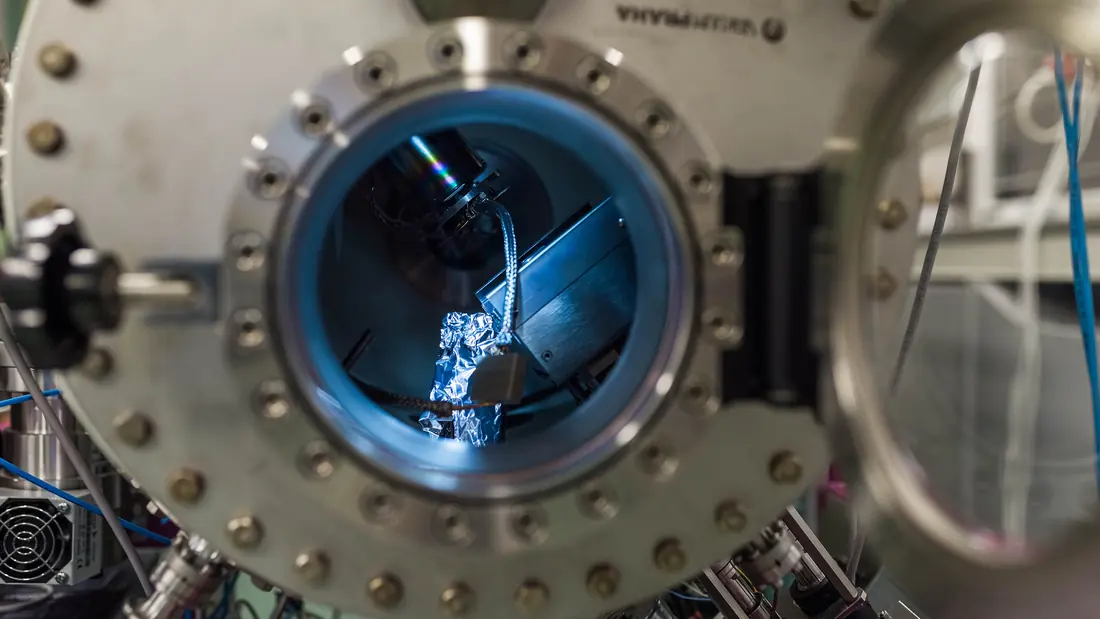
Breaking the ice: Scientists use attracting particles to form an anti-spin ice
In a recent Nature Communications study, researchers have reported the realization of an anti-spin ice, a system that does the opposite of conventional spin ices by breaking the ice rule that governs them.
- Published
- (2 h ago)
- Outlet
- Phys.org
- Section
- Science
- Length here
- Headline and 33-word snippet. The full article is at the source.
More from Phys.org and around the same time
 2,700-year-old mummy head yields first molecular evidence linking aloe to Egyptian embalmingWhat materials did ancient Egyptians use to preserve the dead, and how can their composition still be investigated thousands of years later? An interdisciplinary team at Marburg University has combined modern natural product…This oddball reflective lava world is challenging to understandAmong Kepler and TESS's many surprising exoplanet discoveries are the ultra-short-period (USP) planets. These planets move very quickly and complete an orbit in less than 24 hours. Ancient astronomers thought that Mercury was so…Looking for bats after dark can help science—and change how we see themWhat's that chirping sound coming through the detector? Did you feel something whiz past? Those are just some ways people react when they encounter microbats for the first time. Microbats are small, mostly nocturnal mammals that…Giant virus yields potassium channel gene that illuminates complex protein evolutionResearchers have discovered a gene for a tandem potassium channel in an algal virus. The finding supports the view that giant viruses may have contributed significantly to the evolution of complex proteins. The study is published…Why do people prefer human empathy despite rating AI empathy higher?More people are turning to artificial intelligence (AI)-powered chatbots for companionship and to address loneliness. But can AI-generated empathy replace human connection?Chemists develop AI tool to convert human ingenuity into life-enhancing enzymesMany have voiced concerns that artificial intelligence will take jobs away from humans. But assistant professor of chemistry Zhongyue (John) Yang, along with his former doctoral student Qianzhen Shao (now a postdoc at Stanford)…
This page holds the headline and a short snippet as published by Phys.org, whose feed they came from. The story itself, the photography and the rights stay with them, and the button above goes straight to their site. We keep this page so the headline has a stable address and a record of when it ran.